Solidigm’s commitment to a sustainable future for data storage starts from the inside. Corporate Services is undertaking multiple goals to reduce the company’s carbon footprint, including partnering with the local electric utility company for eco-friendly power sources and pursuing LEED (Leadership in Energy and Environmental Design) Certification for its new buildings.
Using Renewable Energy Sources to Power New R&D Facility
png
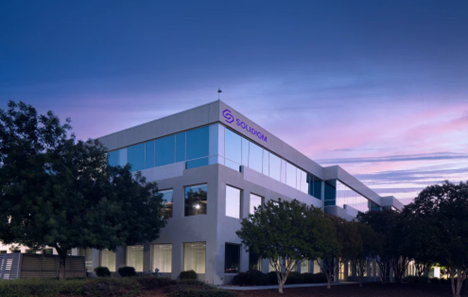
Solidigm’s SAC1 building in Rancho Cordova will open in September. Once operational, it will be the company’s largest research and development facility, consuming up to 5 megawatts of power daily—enough electricity to power about 5,000 mid-sized homes.
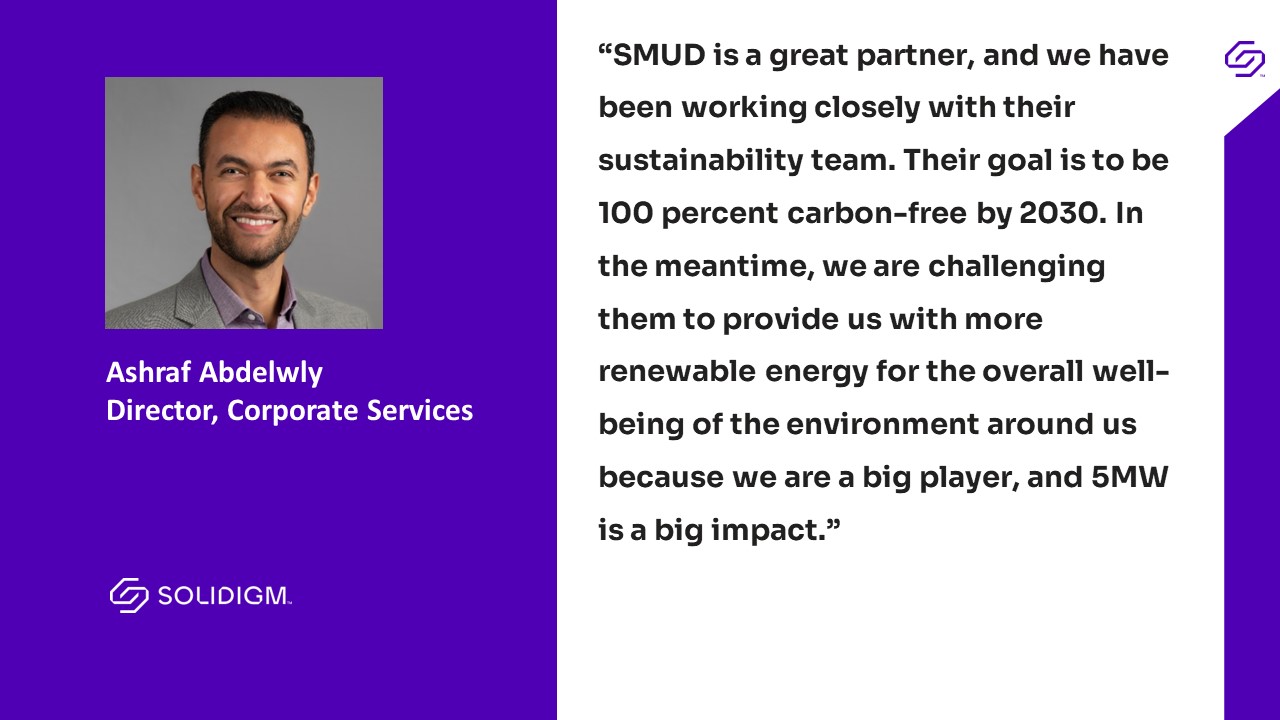
While most electricity in the U.S., about 60 percent, is produced using carbon dioxide-emitting fossil fuels such as coal and natural gas, Solidigm is working with the Sacramento Municipal Utility District (SMUD), the local electric utility, with a goal of having as much of the power for SAC1 come from more environmentally friendly resources as possible, such as solar, wind, and hydroelectric.
jpg
Getting Eco-Friendly with LEED Certification
png
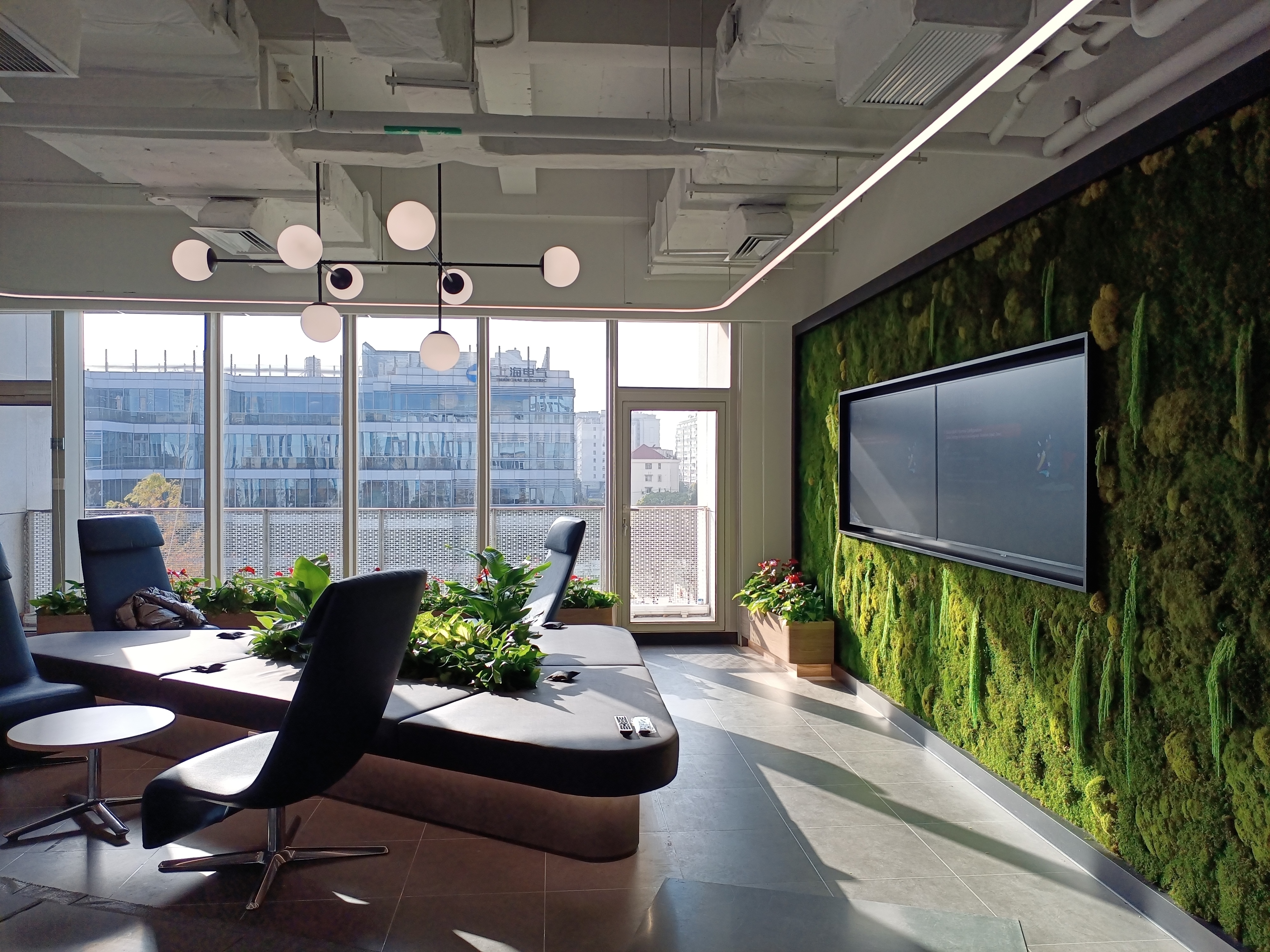
Typical business buildings account for nearly 40 percent of global energy-related CO2 emissions. LEED-certified facilities produce only half of that. Solidigm achieved LEED certification for our Shanghai site and is securing it for other new sites in Gdansk and Taipei.
Ashraf Abdelwly, Director, Corporate Services, says attaining the certification for Solidigm’s new buildings was one of Corporate Services' goals at the earliest planning stages. It requires that building design, construction, and materials have an eco-friendly focus.
Every Building Operation Scrutinized for Sustainable Practices
But it doesn’t end there. How the building is operated and maintained is also a top consideration. “It really involves everything that goes into the site that most people wouldn’t think of,” Ashraf says.
One example from the SAC1 building is using chilled water to cool the enormous amount of heat Solidigm’s engineering equipment generates. This method is about 25 percent more efficient compared to regular cooling solutions.
Other examples include using motion sensor LED lighting, which is 80 percent more efficient than traditional incandescent lights, plus they are only on when the space is in use.
As global leaders look for ways to shrink the environmental footprint of technology infrastructure, Solidigm shares why the industry has championed water-saving liquid cooling for high-power GPUs.
Peak:AIO has developed a wildlife conservation solution using high-density Solidigm SSDs and advanced AI. From digital image capture to sequencing animal genomes, high-density storage is vital to u...
Solidigm is committed to embedding sustainable business practices and has joined three associations that are helping to define industry standards for sustainability.